KVM VPS vs OpenVZ VPS: What Is the Difference?
Introduction
Virtualization technology is an important factor when choosing a VPS hosting service. KVM and OpenVZ are two technologies used to create virtual server environments. They differ in how virtual environments are managed and how operating system resources are isolated.
Understanding these differences can help you choose a VPS that matches your software and operating system requirements.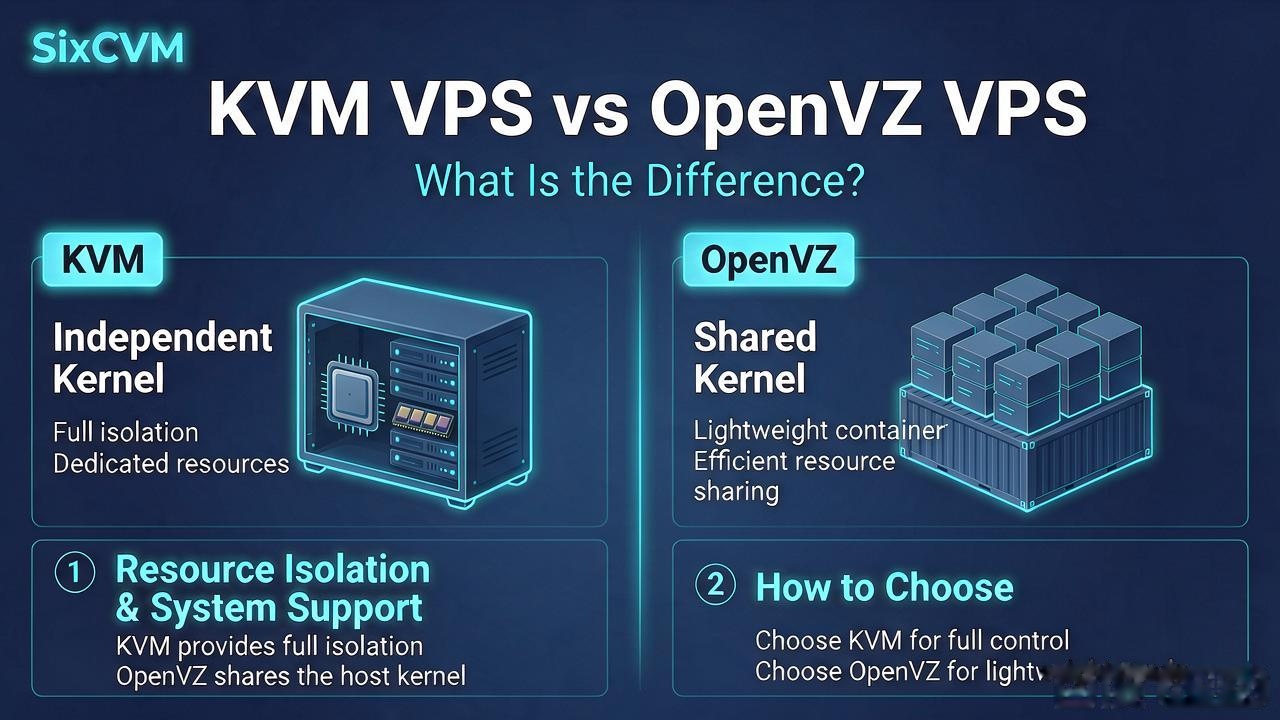
1. What Is KVM Virtualization?
KVM stands for Kernel-based Virtual Machine. It is a virtualization technology built into the Linux kernel. KVM allows a physical server to run virtual machines with their own virtual hardware environments.
A KVM VPS generally provides an independent guest operating system and kernel. This can be useful when you need greater flexibility in operating system and system-level configuration.
2. What Is OpenVZ?
OpenVZ is a container-based virtualization technology. Instead of creating a fully independent virtual machine for each customer, OpenVZ uses containers that share the host system's Linux kernel.
This architecture can be efficient, but it may impose restrictions on kernel-level customization and operating system choices.
3. KVM vs OpenVZ Comparison
The table below summarizes the typical architectural differences. Actual performance and isolation characteristics also depend on provider configuration and host hardware.
4. Which One Should You Choose?
KVM is often a good option when you need flexible operating system installation, custom kernel settings, general-purpose application hosting or an independent virtual machine environment.
Container-based virtualization may be suitable for lightweight workloads that do not require kernel customization. Before buying, check the provider's supported operating systems, resource allocation and virtualization details.
5. SixCVM KVM Cloud Servers
SixCVM's Hong Kong, Japan, USA and Singapore cloud server pages list KVM full virtualization. The product pages also describe NVMe storage and multiple operating system options. If KVM virtualization is important to your project, review the product specifications before ordering.
Technology comparison
|
Feature |
KVM |
OpenVZ |
|
Architecture |
Hardware-assisted virtualization |
Container-based virtualization |
|
Kernel |
Independent guest kernel |
Shared host kernel |
|
OS flexibility |
Generally broader |
More limited |
|
Kernel customization |
More flexible |
Restricted |
|
Isolation model |
Virtual machine |
Container |
|
Typical use |
General-purpose VPS |
Lightweight Linux hosting |
Frequently Asked Questions
Is KVM better than OpenVZ?
Neither is universally better. KVM generally offers more flexibility for independent virtual machine environments, while container virtualization can be efficient for certain Linux workloads.
Can I install a custom Linux kernel on KVM?
KVM generally supports an independent guest kernel, but available installation and boot options depend on the provider.
Does KVM guarantee faster VPS performance?
No. Performance also depends on CPU allocation, storage, memory, network quality and host-node load.
Can OpenVZ run Windows?
Traditional OpenVZ containers share a Linux kernel and are not designed to run a separate Windows kernel like a full virtual machine.
Suggested Internal Links
Call to Action
Explore SixCVM KVM cloud servers: use the Hong Kong and Japan product links above, or select another region from the English product directory.